ICML 2026
NVIDIA Research
Making intelligence
efficient.
At the Deep Learning Efficiency Research (DLER) team at NVIDIA Research, we constantly push toward faster, cheaper, and less energy-intensive intelligence.
About DLER
Researching efficiency across the AI stack.
Led by Dr. Pavlo Molchanov, DLER is part of NVIDIA Research’s Learning and Perception Research group, led by Dr. Jan Kautz.
Our mission is to drive advances in the efficiency of artificial intelligence. At the hardware layer, we reduce model memory, inference latency, and energy use. At the software layer, we develop efficient small models and reliable agentic systems.
Research interests
Four foci of
our research.
-
01
Models
Efficient architectures and models
Novel model designs that improve the capability-to-compute ratio, from hybrid language models to flexible networks. Compression, sparsity, quantization, distillation, and neural architecture search for practical, efficient deployment.
-
02
Multimodal
Multimodal representations
Powerful and efficient representations of images, video, language, and the connections between them.
-
03
Agents
Efficient, reliable agentic systems
Efficient, dependable language and multimodal model applications for assistants, robotics, and autonomous driving.
-
04
Systems
Local frontier intelligence
AI systems that perform at the frontier level while running locally on personal devices.
Selected publications
Research highlights.
Open research, published for the benefit of the scientific community.
ICML 2026
Nemotron-Labs-Diffusion-Image: Advancing Masked Discrete Diffusion for High-Resolution Image Synthesis
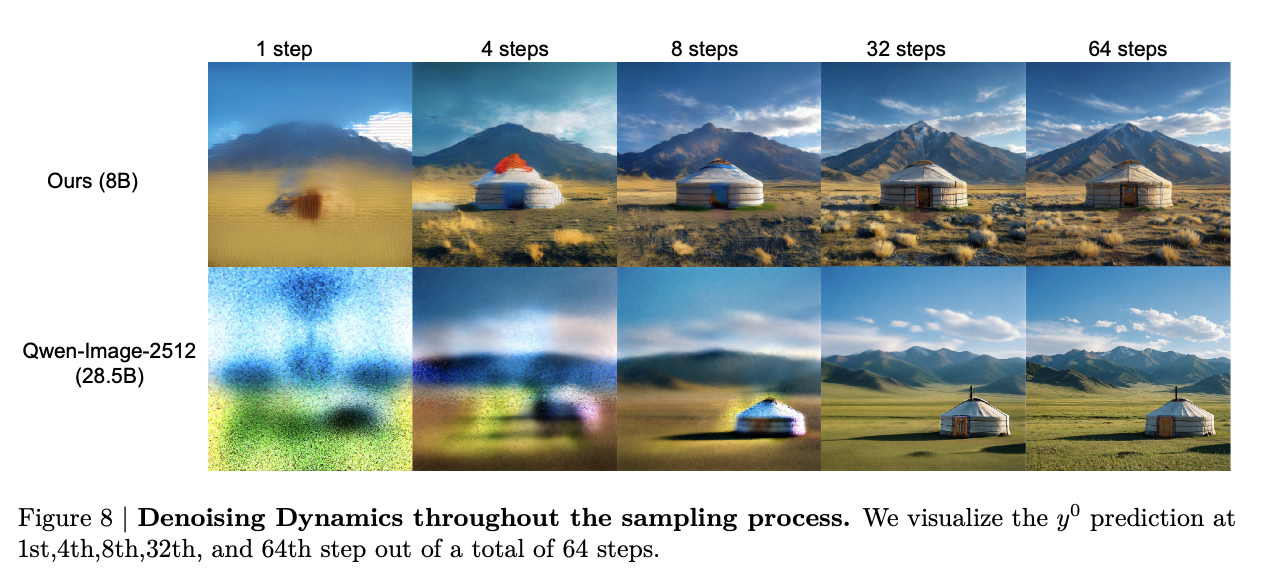
NL-Diffusion-Image generates high-resolution images through masked discrete diffusion, using grouped cross-entropy and token editing to improve training efficiency, image fidelity, and self-correction while supporting flexible few-step generation.
ICML 2026
Star Elastic: Many-in-One Reasoning LLMs with Efficient Budget Control
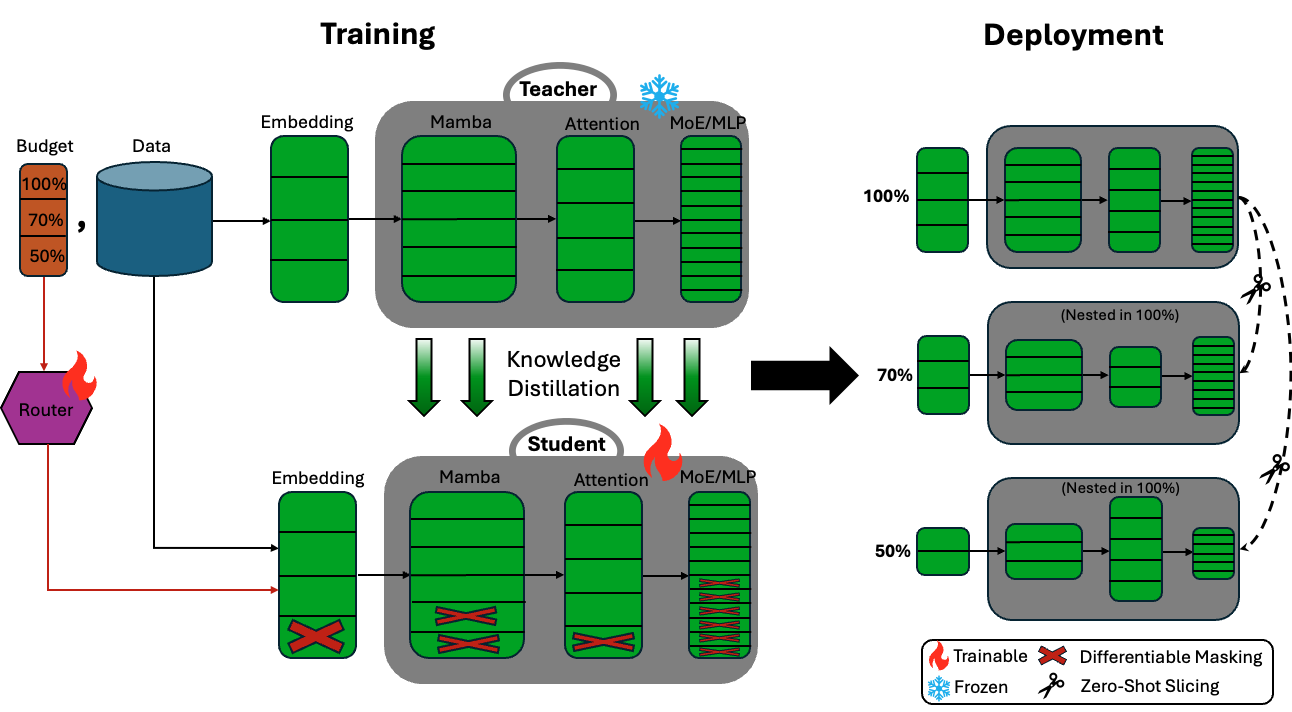
Star Elastic is a post-training method that takes an already-trained reasoning LLM and, in a single training job, embeds N nested submodels inside it that share its weights and can be sliced out at deployment with no further training; this yields N-fold compute savings over training each model separately. It also unlocks elastic budget control: because the submodels are nested, inference can use a different submodel for each reasoning phase, rather than allocating constant resources regardless of token difficulty. Applied to the pretrained Nemotron 3 Nano 30B-A3B, it produced a 30B + 23B + 12B nested family with only ~160B tokens; the Elastic-30B variant matches or exceeds the parent on most benchmarks, and hybrid budget control delivers up to 16% higher accuracy and 1.9x faster inference than standard single-model budget control.
ICLR 2026
OmniVinci: Enhancing Architecture and Data for Omni-Modal Understanding LLM
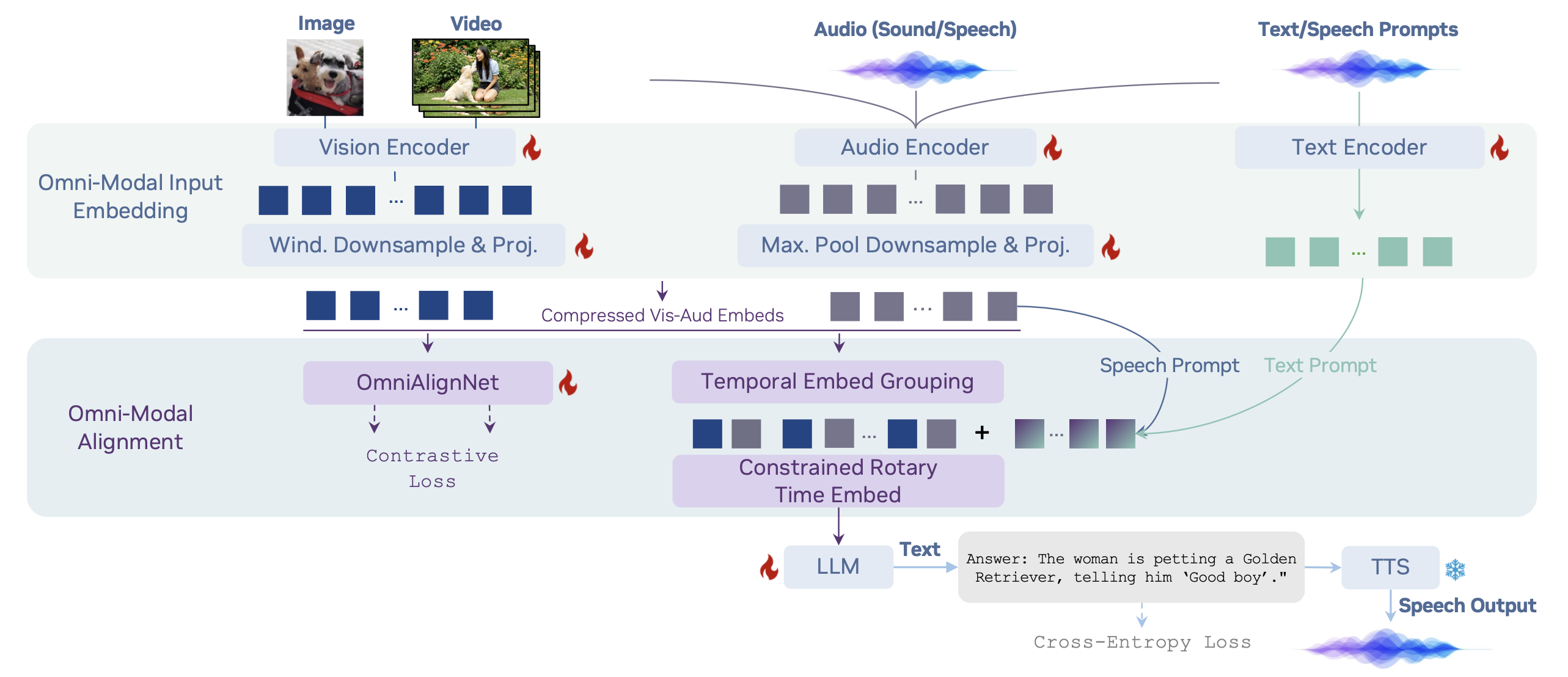
OmniVinci is NVIDIA's first systematic research of new model architecture and data curation for omni-modal LLMs, resulting in a model that achieves state-of-the-art performance in joint perception of images, videos, audio, and text.
ICML 2026
GDPO: Group reward-Decoupled Normalization Policy Optimization for Multi-reward RL Optimization
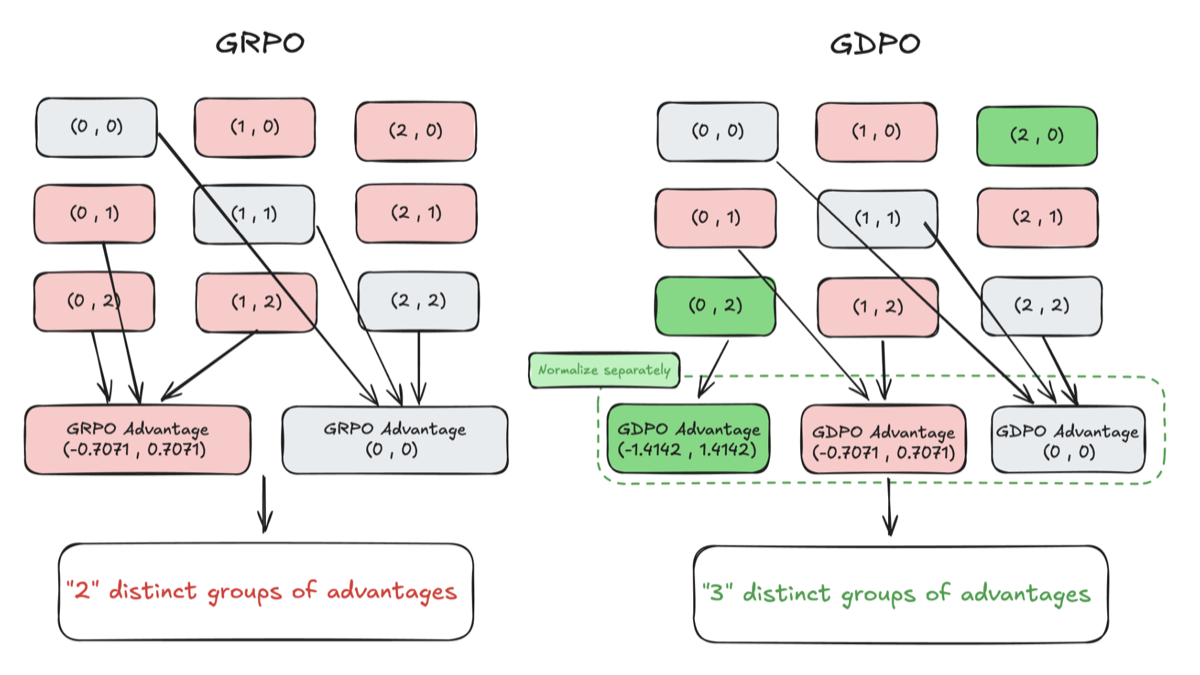
GDPO improves GRPO for reinforcement learning with multiple rewards by normalizing each reward separately before combining them. This preserves distinctions that GRPO can collapse when it sums rewards first, while final batch normalization supports stable optimization across correctness, formatting, length, and other objectives.
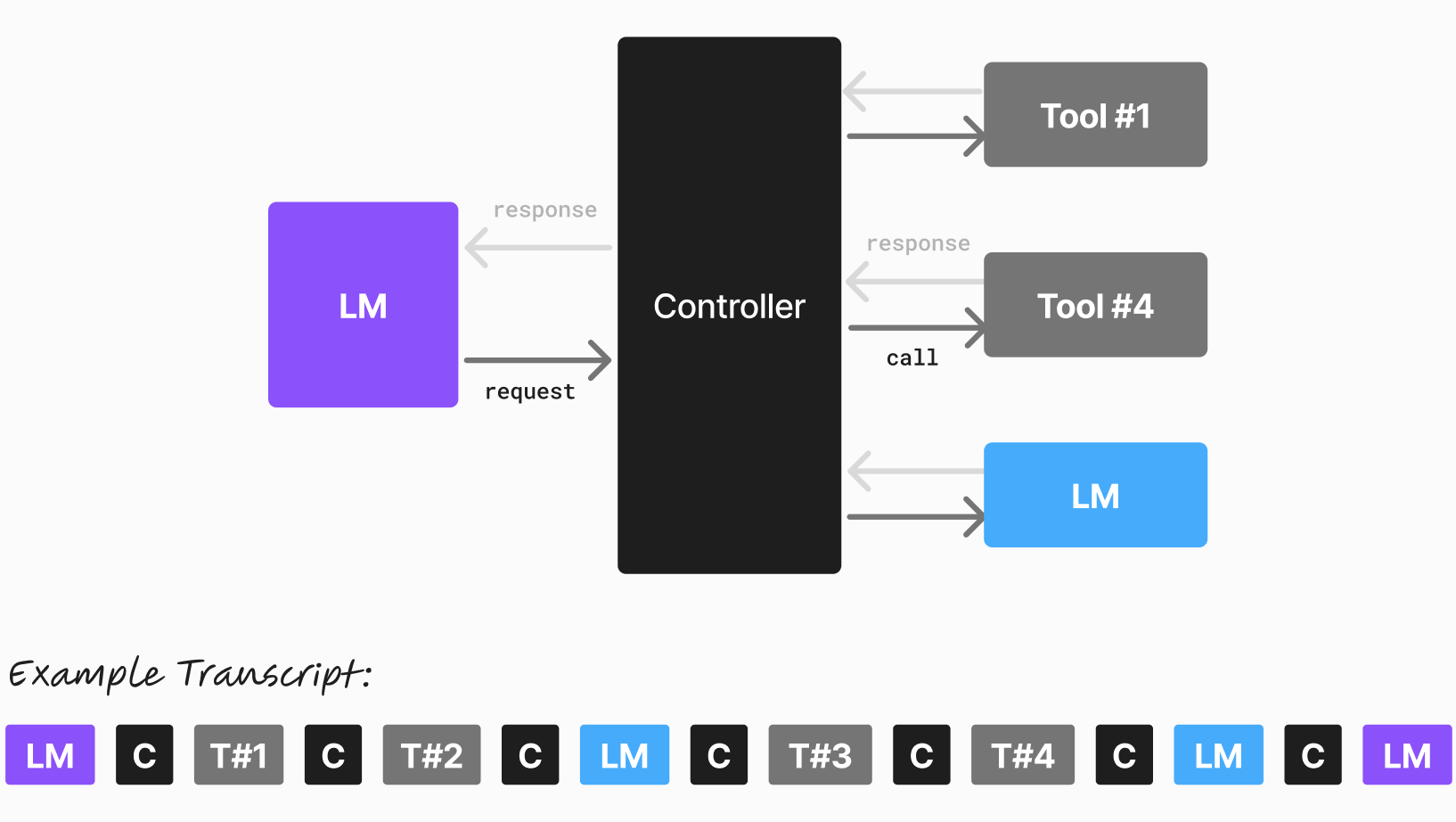
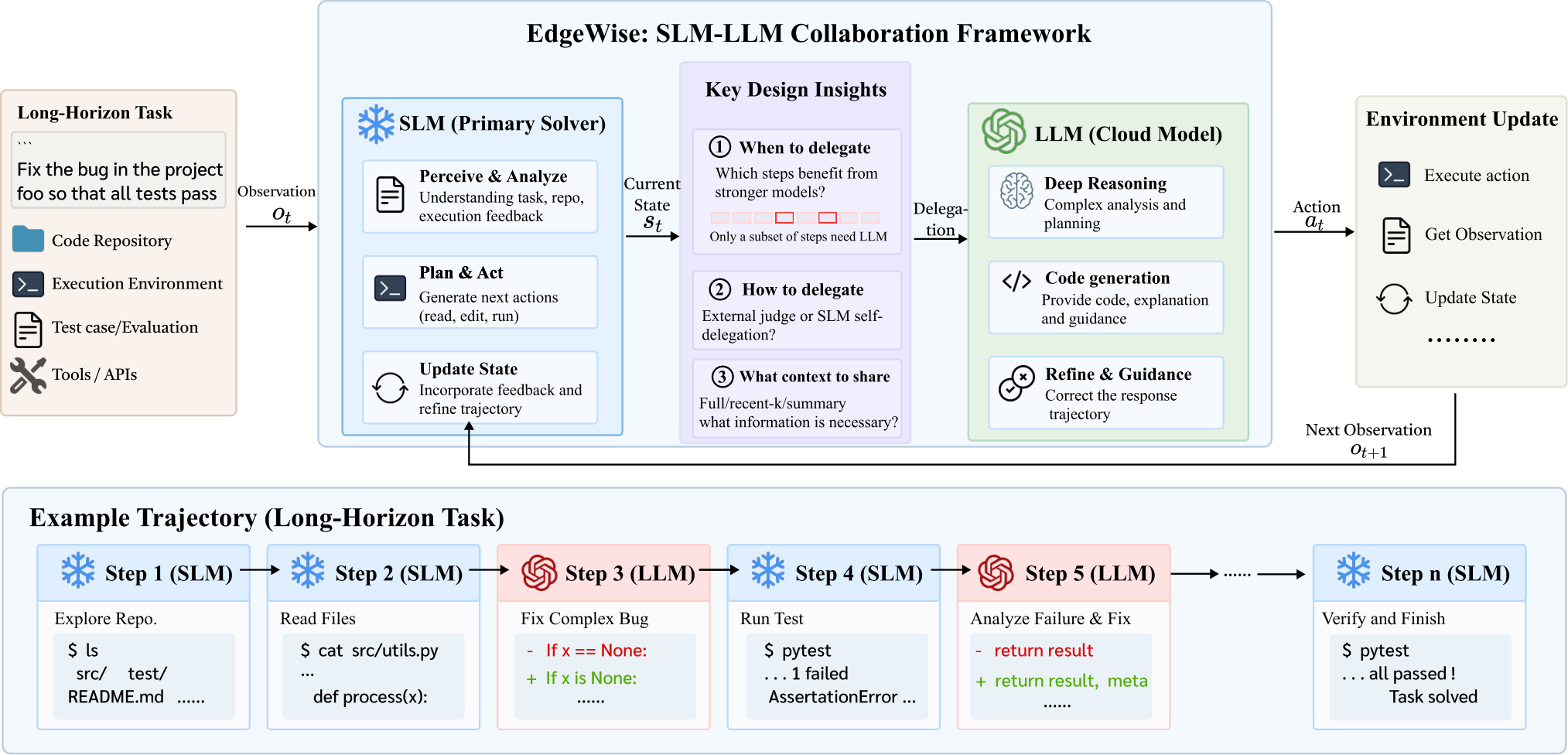
Small Language Models are the Future of Agentic AI
Small language models (SLMs) are often overlooked in favor of larger, more powerful models. However, we argue that small LLMs are the future of agentic AI due to their efficiency, accessibility, and adaptability. Here we detail our position on the future of agentic AI, arguing with evidence that that the industry and the community are to benefit from a switch from LLMs to SLMs. Our position is based on three key points: That SLMs are sufficiently powerful, inherently more suitable, and necessarily more economical for many invocations in agentic systems. We then draw a conclusion that they are, to a large extent, the future of agentic AI. We also outline a LLM-to-SLM conversion algorithm that can be employed to produce a SLM for a specific agentic workflow. We welcome correspondence on the topic.
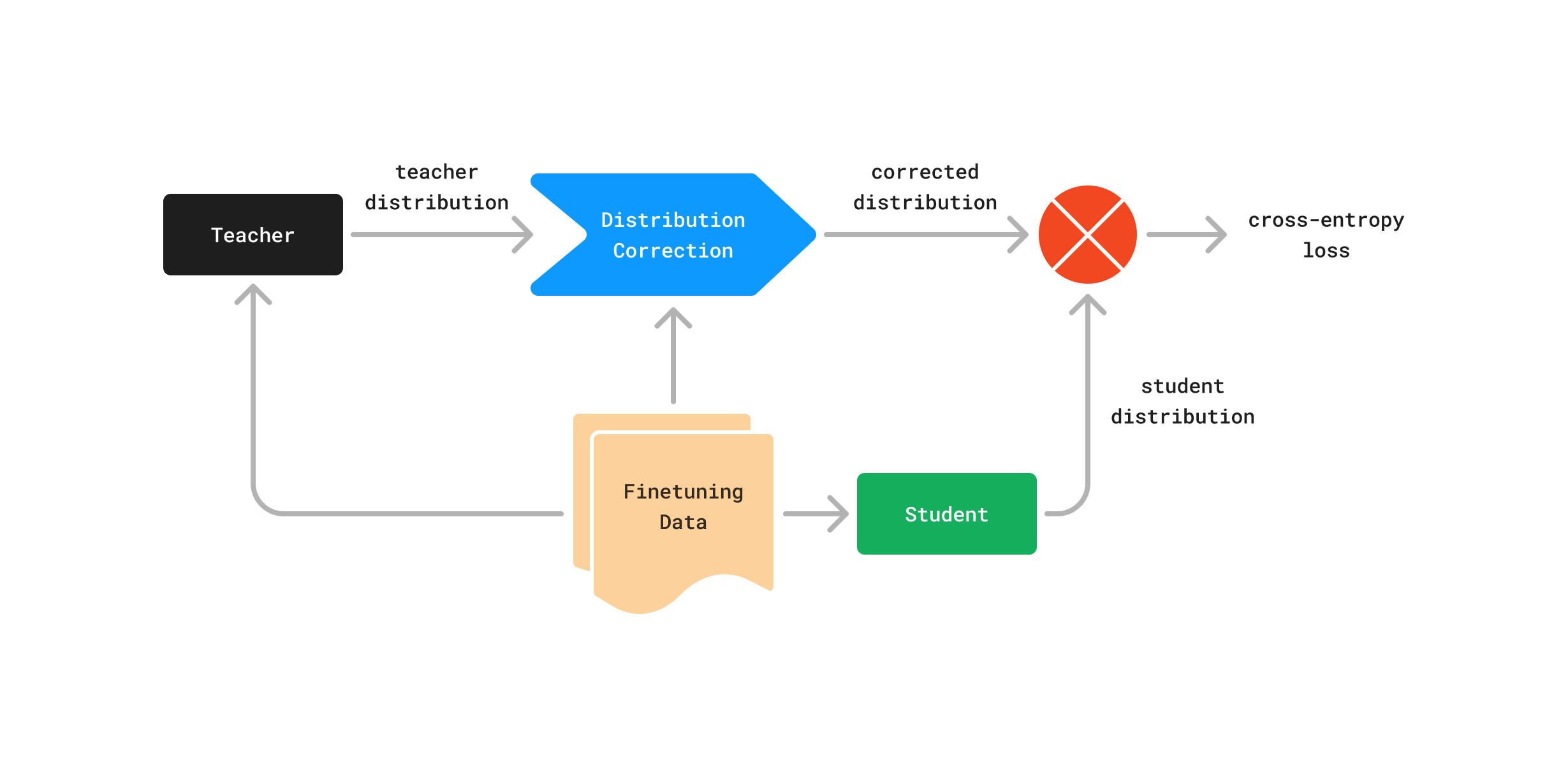
Minifinetuning: Low-Data Generation Domain Adaptation through Corrective Self-Distillation
Finetuning language models for a new domain inevitably leads to the deterioration of their general performance. This becomes more pronounced the more limited the finetuning data resource.We introduce minifinetuning (MFT), a method for language model domain adaptation that considerably reduces the effects of overfitting-induced degeneralization in low-data settings and which does so in the absence of any pre-training data for replay. MFT demonstrates 2-10x more favourable specialization-to-degeneralization ratios than standard finetuning across a wide range of models and domains and exhibits an intrinsic robustness to overfitting when data in the new domain is scarce and down to as little as 500 samples.Employing corrective self-distillation that is individualized on the sample level, MFT outperforms parameter-efficient finetuning methods, demonstrates replay-like degeneralization mitigation properties, and is composable with either for a combined effect.
NeurIPS 2025 (spotlight)
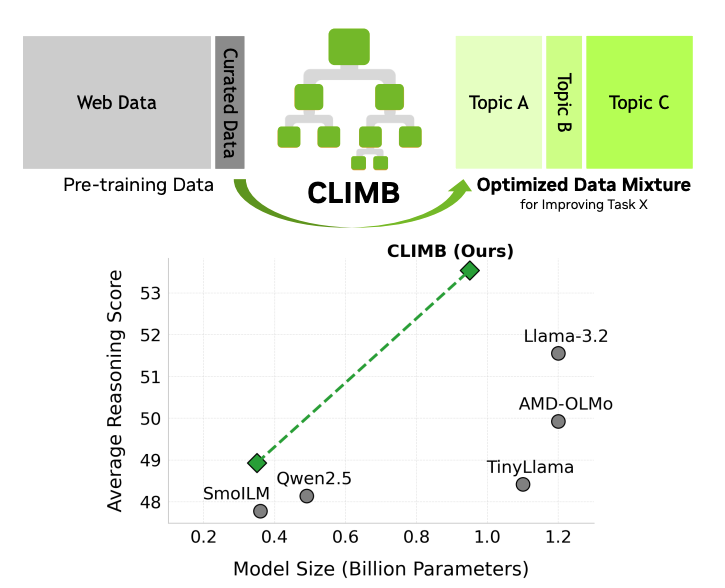
CLIMB: CLustering-based Iterative Data Mixture Bootstrapping
We introduce CLustering-based Iterative Data Mixture Bootstrapping (CLIMB), an automated framework that discovers, evaluates, and refines data mixtures in a pre-training setting. Specifically, CLIMB embeds and clusters large-scale datasets in a semantic space and then iteratively searches for optimal mixtures using a smaller proxy model and a predictor. When continuously trained on 400B tokens with this mixture, our 950M model exceeds the state-of-the-art Llama-3.2-1B by 2.0% averaged across 12 general reasoning tasks. Moreover, we observe that optimizing for a specific domain (e.g., Social Sciences) yields a 5% improvement over random sampling. We introduce ClimbLab, a filtered 1.3-trillion-token corpus with 20 clusters as a research playground, and ClimbMix, a compact yet powerful 400-billion-token dataset designed for efficient pre-training that delivers superior performance under an equal token budget.
CVPR 2025 (highlight)
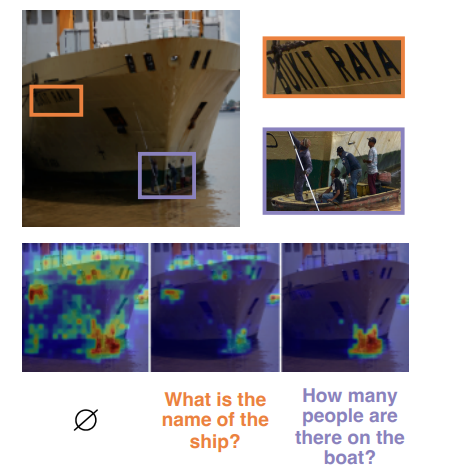
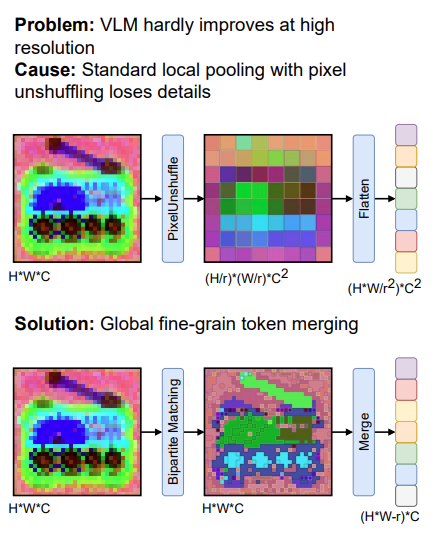
VILA-HD: Scaling Vision Pre-Training to 4K Resolution
We introduce PS3, a framework that scales CLIP-style vision pre-training to 4K resolution with near-constant cost by selectively processing local regions and contrasting them with detailed captions. This enables high-resolution representation learning with greatly reduced computational overhead. The resulting model, VILA-HD, significantly improves high-resolution visual perception compared to baselines without high-resolution vision pre-training, such as AnyRes and S², while using up to 4.3× fewer tokens. VILA-HD outperforms previous multi-modal large language models (MLLMs), including NVILA and Qwen2-VL, across multiple benchmarks. To further evaluate high-resolution perception, we propose 4KPro, a new benchmark of image QA at 4K resolution, on which VILA-HD achieves a 14.5% improvement over GPT-4o and a 3.2% improvement with 2.96× speedup over Qwen2-VL.
ICML 2025
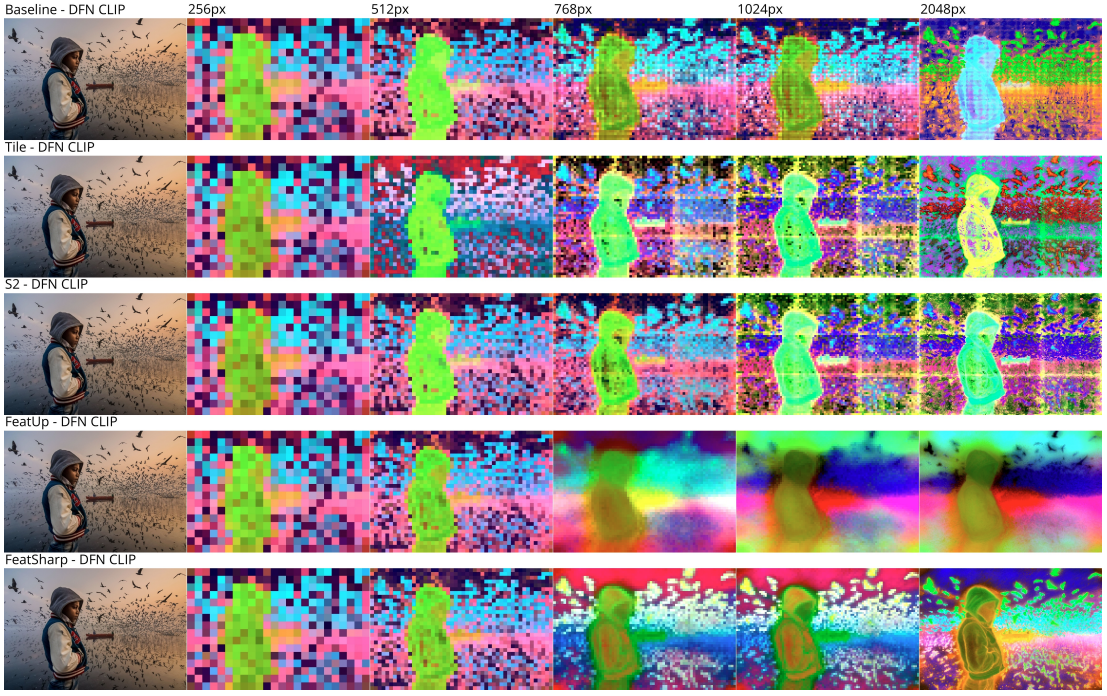
FeatSharp: Your Vision Model Features, Sharper
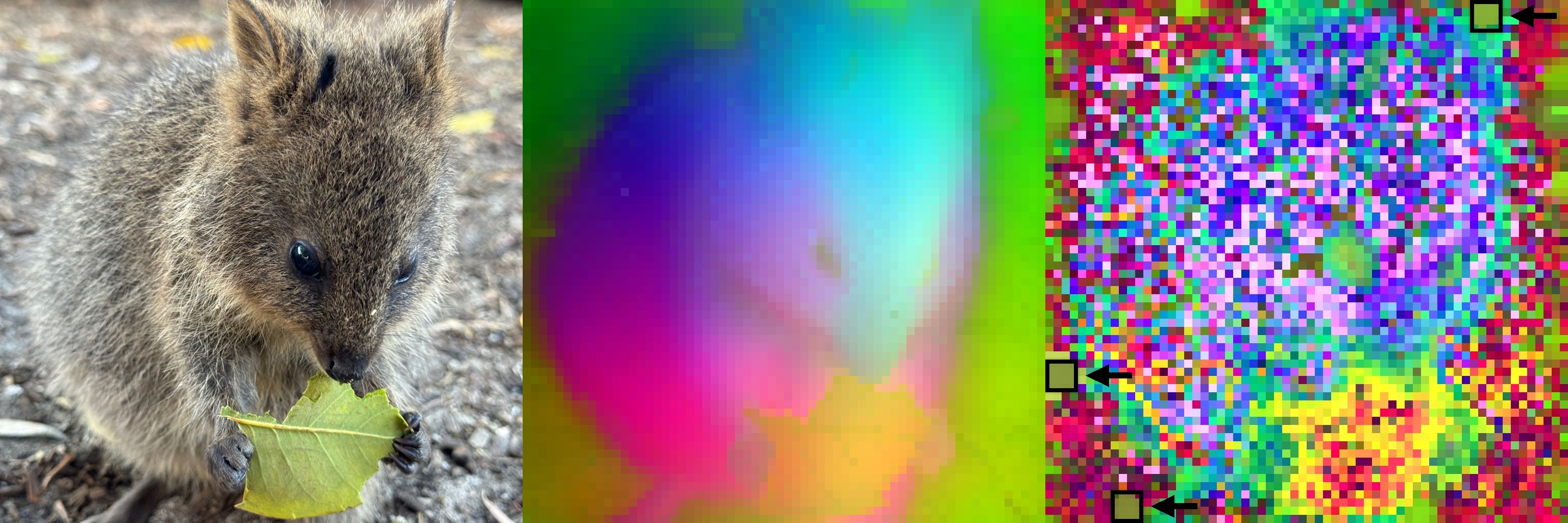
The feature maps of vision encoders are fundamental to myriad modern AI tasks, ranging from core perception algorithms (e.g. semantic segmentation, object detection, depth perception, etc.) to modern multimodal understanding in vision-language models (VLMs). Currently, in computer vision, the frontier of general purpose vision backbones are Vision Transformers (ViT), typically trained using contrastive loss (e.g. CLIP). A key problem with most off-the-shelf ViTs, particularly CLIP, is that these models are inflexibly low resolution. Most run at 224x224px, while the "high resolution" versions are around 378-448px, but still inflexible. We introduce a novel method to coherently and cheaply upsample the feature maps of low-res vision encoders while picking up on fine-grained details that would otherwise be lost due to resolution. We demonstrate the effectiveness of this approach on core perception tasks as well as within agglomerative model (RADIO) training as a way of providing richer targets for distillation.
CVPR 2025
RADIOv2.5: Improved Baselines for Agglomerative Vision Foundation Models
Agglomerative models have recently emerged as a powerful approach to training vision foundation models, leveraging multi-teacher distillation from existing models such as CLIP, DINO, and SAM. This strategy enables the efficient creation of robust models, combining the strengths of individual teachers while significantly reducing computational and resource demands. In this paper, we thoroughly analyze state-of-the-art agglomerative models, identifying critical challenges including resolution mode shifts, teacher imbalance, idiosyncratic teacher artifacts, and an excessive number of output tokens. To address these issues, we propose several novel solutions: multi-resolution training, mosaic augmentation, and improved balancing of teacher loss functions. Specifically, in the context of Vision Language Models, we introduce a token compression technique to maintain high-resolution information within a fixed token count.
CVPR 2025
NVILA: Efficient Frontier Visual Language Models
We introduce NVILA, a family of open visual language models (VLMs) designed to optimize both efficiency and accuracy. Building upon VILA, NVILA employs a 'scale-then-compress' strategy: first enhancing spatial and temporal resolutions to preserve visual details, then compressing visual tokens to reduce computational overhead. This approach enables NVILA to efficiently process high-resolution images and long videos. Our systematic investigation enhances NVILA's efficiency throughout its lifecycle, from training and fine-tuning to deployment. NVILA matches or surpasses the accuracy of many leading open and proprietary VLMs across a wide range of image and video benchmarks. Simultaneously, it reduces training costs by 4.5×, fine-tuning memory usage by 3.4×, pre-filling latency by 1.6–2.2×, and decoding latency by 1.2–2.8×.
ICLR 2025 (spotlight)
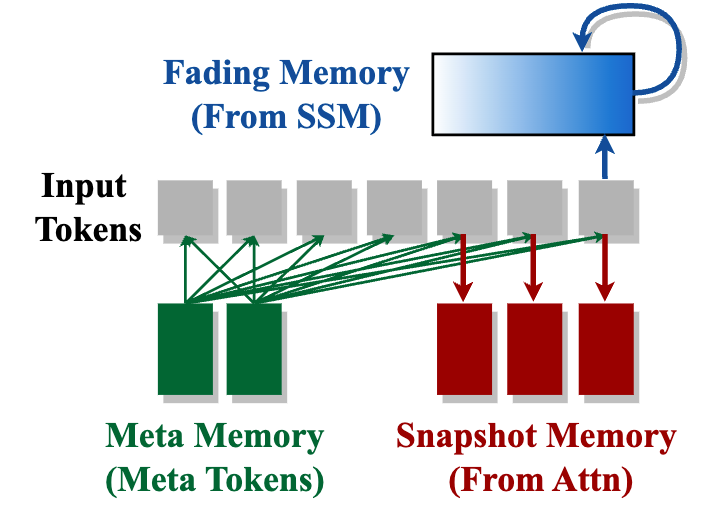
Hymba: A Hybrid-head Architecture for Small Language Models
We propose Hymba, a family of small language models featuring a hybrid-head parallel architecture that integrates transformer attention mechanisms with state space models (SSMs) for enhanced efficiency. Attention heads provide high-resolution recall, while SSM heads enable efficient context summarization. Additionally, we introduce learnable meta tokens that are prepended to prompts, storing critical information and alleviating the "forced-to-attend" burden associated with attention mechanisms. This model is further optimized by incorporating cross-layer key-value (KV) sharing and partial sliding window attention, resulting in a compact cache size. Notably, Hymba achieves state-of-the-art results for small LMs.
NeurIPS 2024 (spotlight)
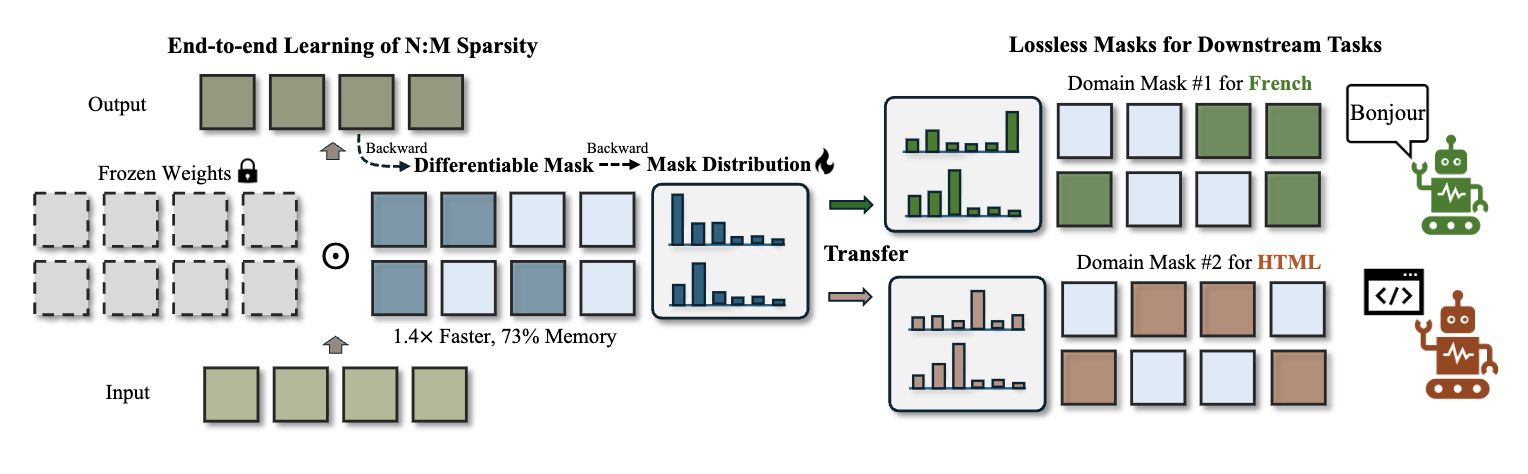
MaskLLM: Learnable Semi-Structured Sparsity for Large Language Models
MaskLLM learns 2:4 semi-structured sparsity end to end by modeling pruning masks as differentiable distributions while keeping model weights frozen. Across LLaMA-2, Nemotron-4, and GPT-3 models from 843M to 15B parameters, it preserves substantially more accuracy than prior pruning methods and supports transferable, task-specific masks for efficient inference.
NeurIPS 2024
Compact Language Models via Pruning and Knowledge Distillation
We develop an efficient model compression strategy for LLMs that combines depth, width, attention and MLP pruning with knowledge-distillation-based retraining. We use our strategy to compress the Nemotron-4 family of LLMs by a factor of 2-4x, and compare their performance to similarly-sized models on a variety of language modeling tasks. Deriving 8B and 4B models from an already pretrained 15B model using our approach requires up to 40x fewer training tokens per model compared to training from scratch; this results in compute cost savings of 1.8x for training the full model family (15B, 8B, and 4B).
ICML 2024 (oral)
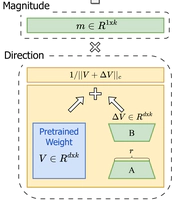
DoRA: Weight-Decomposed Low-Rank Adaptation
DoRA improves low-rank adaptation by decomposing each pretrained weight into magnitude and direction, training the magnitude directly while using LoRA for directional updates. Across LLaMA, LLaVA, and VL-BART, it more closely resembles full fine-tuning and consistently outperforms LoRA while retaining low parameter costs and adding no inference latency.
ICML 2024 (oral)
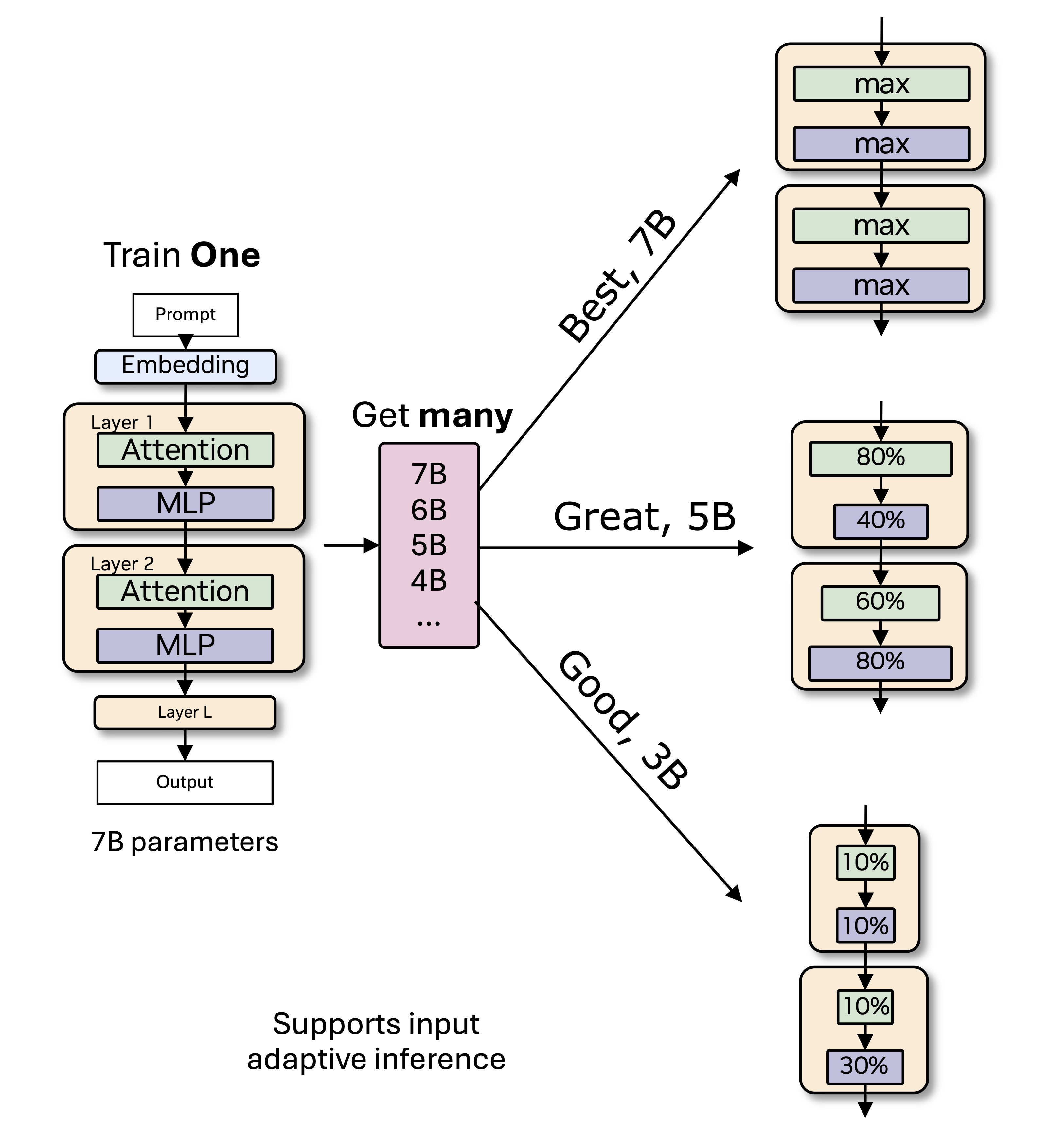
Flextron: Many-in-One Flexible Large Language Model
Training modern LLMs is extremely resource intensive, and customizing them for various deployment scenarios characterized by limited compute and memory resources through repeated training is impractical. We introduce Flextron, a network architecture and post-training model optimization framework supporting flexible model deployment.
People
The DLER team.
Alumni
Former team members
Interns
Past & present interns
- Shih-Yang Liu2025, HKUST↗
- Zhifan Ye2025, Georgia Institute of Technology, USA↗
- Lex Whalen2025, Georgia Institute of Technology, USA↗
- Yonggan Fu2024, Georgia Institute of Technology, USA↗
- Ruisi Cai2023-2024, University of Texas at Austin, USA↗
- Baifeng Shi2024, UC Berkeley, USA↗
- Shoaib Ahmed Siddiqui2024, University of Cambridge, UK↗
- Hanrong Ye2023-2024, CSE HKUST↗
- Gongfan Fang2023-2024, National University of Singapore, Singapore↗
- Ilia Markov2023-2024, Institute of Science and Technology Austria↗
News
From the lab.
Recent publications, conference appearances, awards, and team updates.
Work with us
Build efficient AI
with DLER.
We welcome applications from exceptional deep learning researchers interested in efficient, capable, and reliable AI.